Notarial deeds
Archival series 2 E — notaries' minutes & repertories
Notarial deeds are the richest source for land history: they name the parties, describe the property precisely, and record the act that transferred or charged it — often centuries deep.
What a notarial deed contains
- The parties — full names, filiation, residence, profession, and their role (seller, buyer, spouses, testator, heirs…).
- The act: type, date, the notary and their office (étude), the archival reference (cote, folio).
- The property: designation/place-name, section & number when cited, area, value, and the abutting parcels (confronts/aboutissants).
- Conditions: price, rents, usufruct, soulte, indivision shares — and the witnesses.
Common deed types
Sale deed
Transfer of ownership; names seller, buyer, parcel and price.
Lease (bail à ferme)
Notarial lease: owner, tenant, duration and annual rent.
Marriage contract
Property regime, dowry lands and future inheritance clauses.
Will (testament)
Testator's last wishes; land distributed among heirs.
Estate inventory
After-death listing of all goods, debts and real estate.
Partition / gift / exchange
Division among heirs, free transfer or mutual land swap.
Step by step in GénéFoncier
-
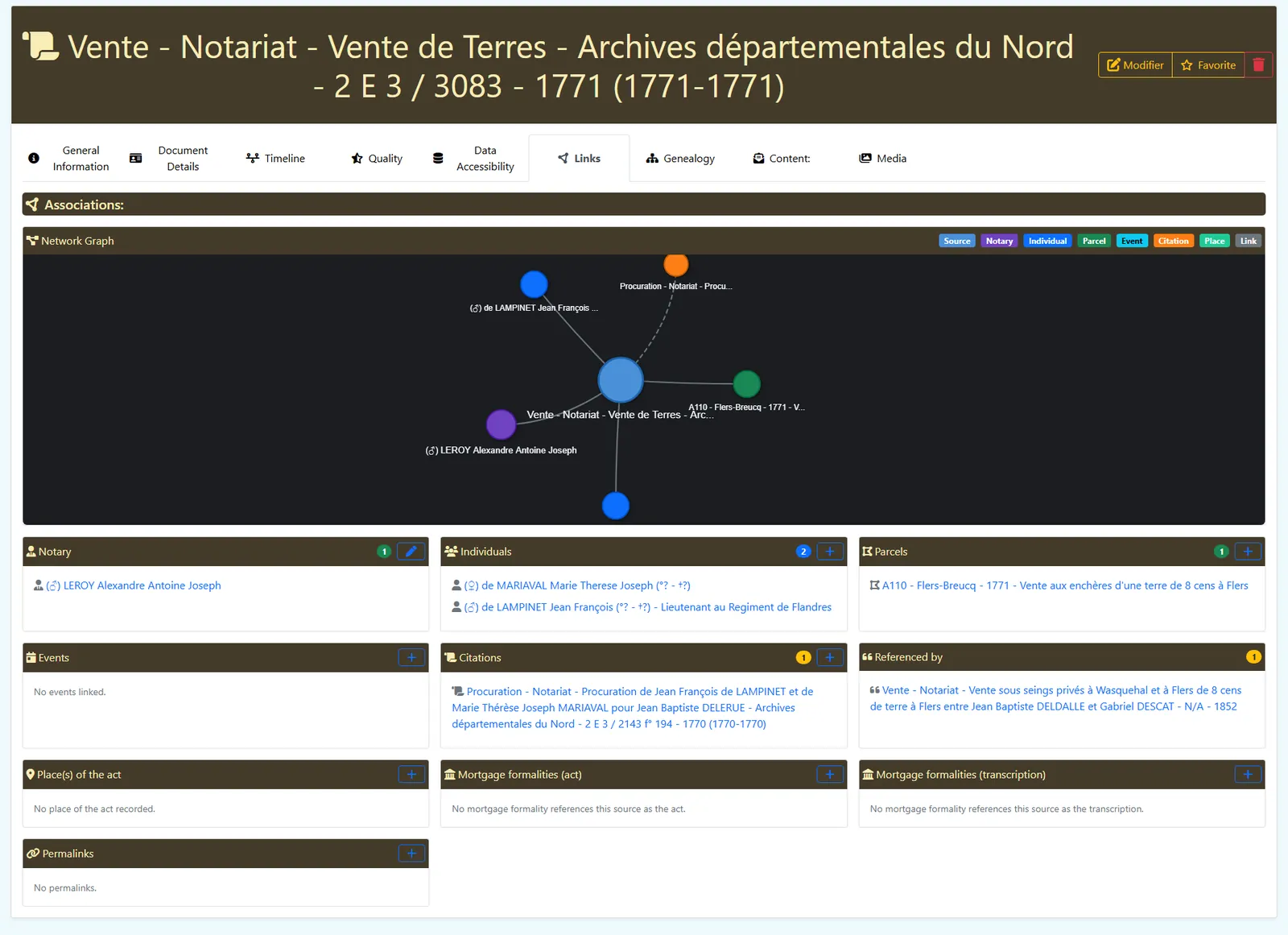
Create the source. Type 'notarial deed', the series (2 E), the date and the cote/folio; upload the scan and transcribe the text.
-
Record the notary. Link the notary and their office (étude) so every deed they drew is grouped.
Tip: you can also start here — create the notary as an individual first, then open their record and promote them to notary to also create the étude. Then create the source and link the notary.
-
Create the people. Add each party with their role (seller, buyer, spouses, testator, heirs…) and tie them to the source.
-
Attach it to the land. On the parcel, add an event of the matching type (sale, succession, gift, partition) dated to the deed, with its owners, surfaces and abutting parcels.
-
Cite everywhere. Each fact you derive — a name, a price, a boundary — points back to this deed as its proof.
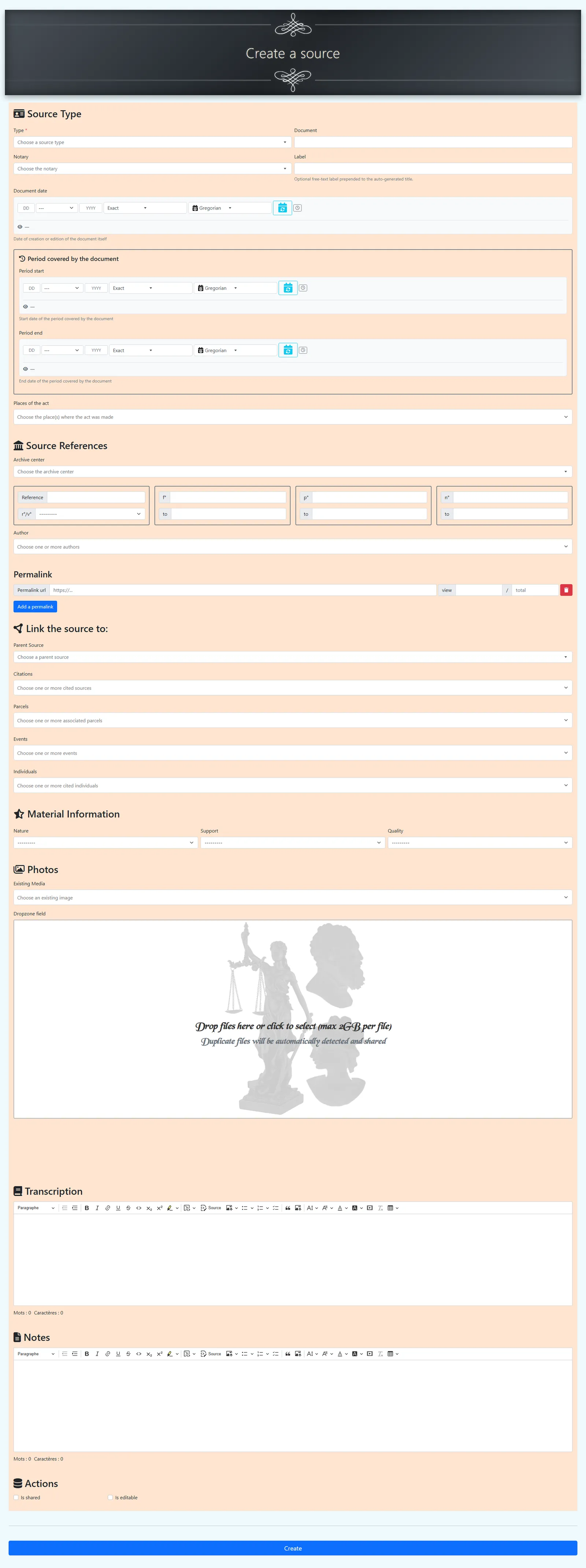
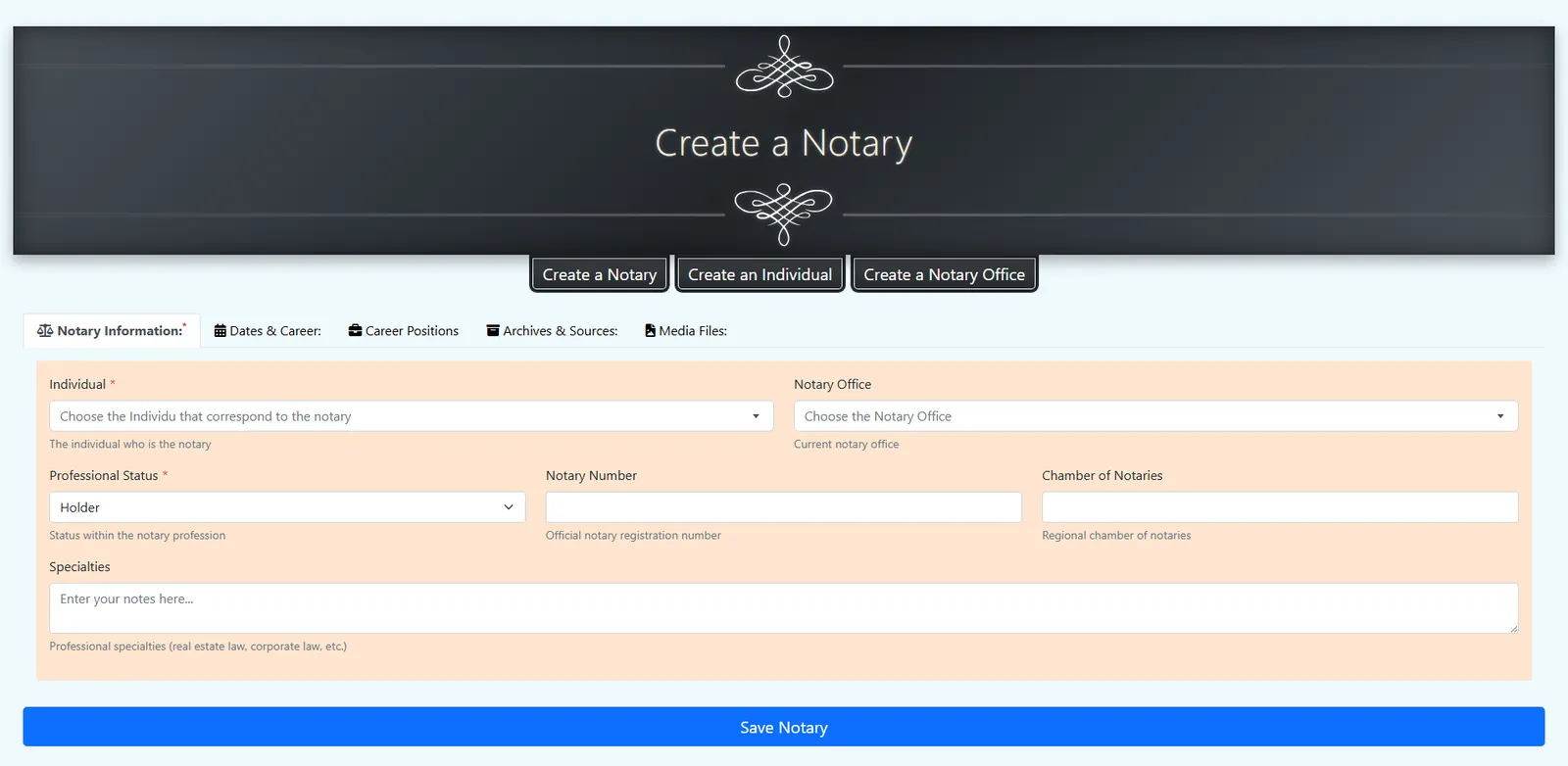
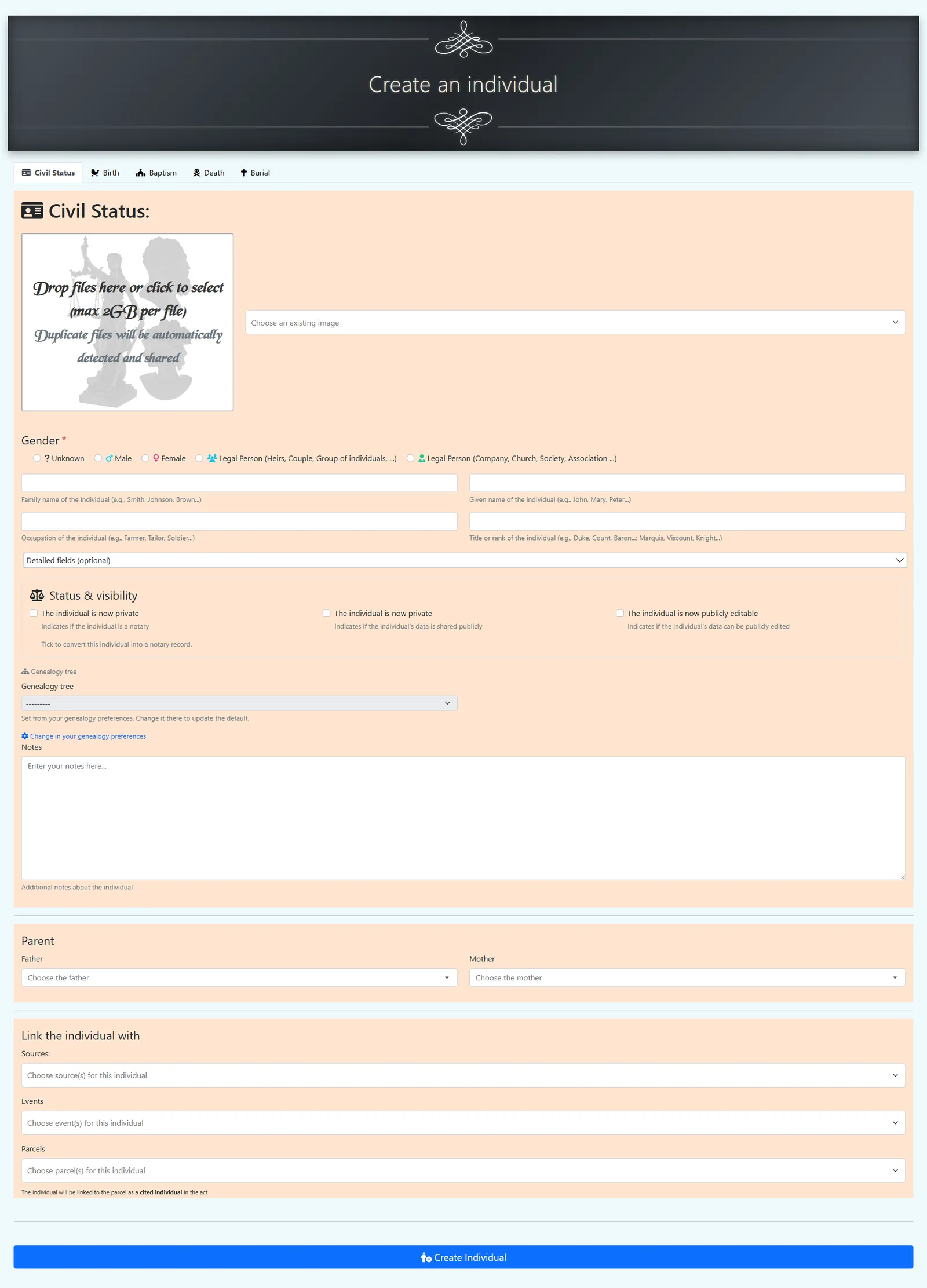
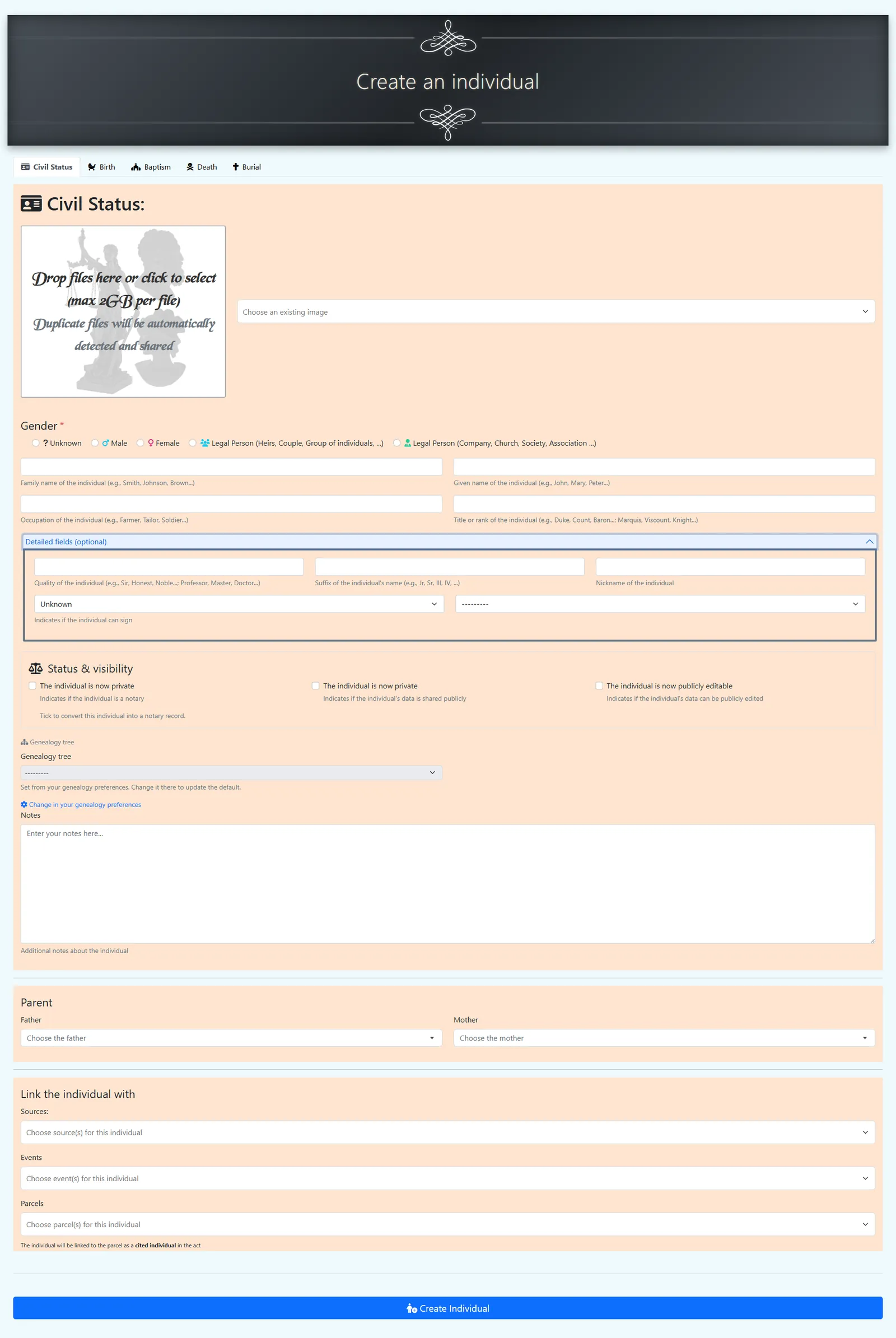
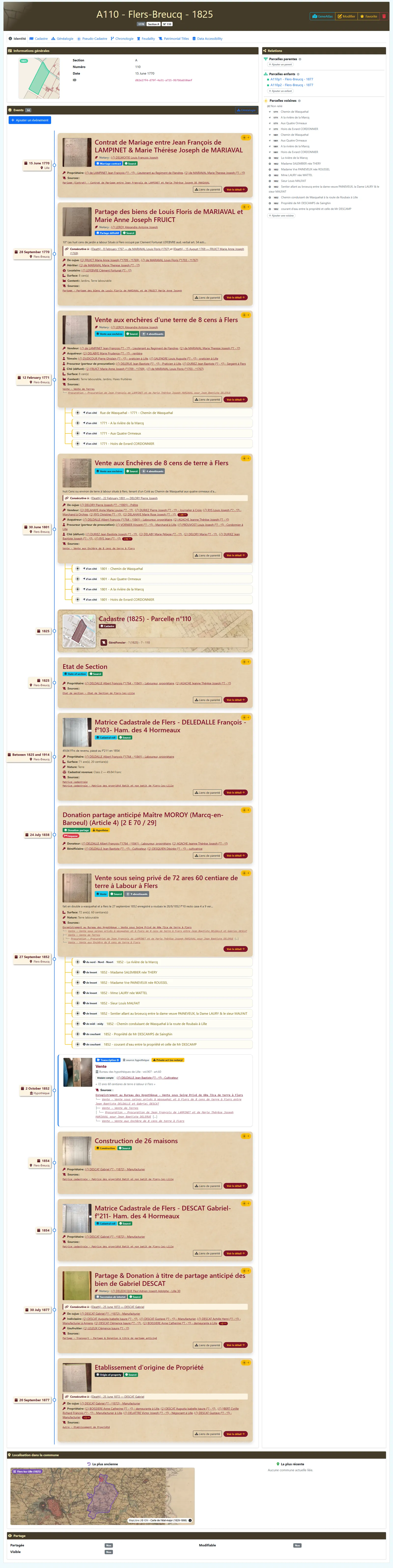
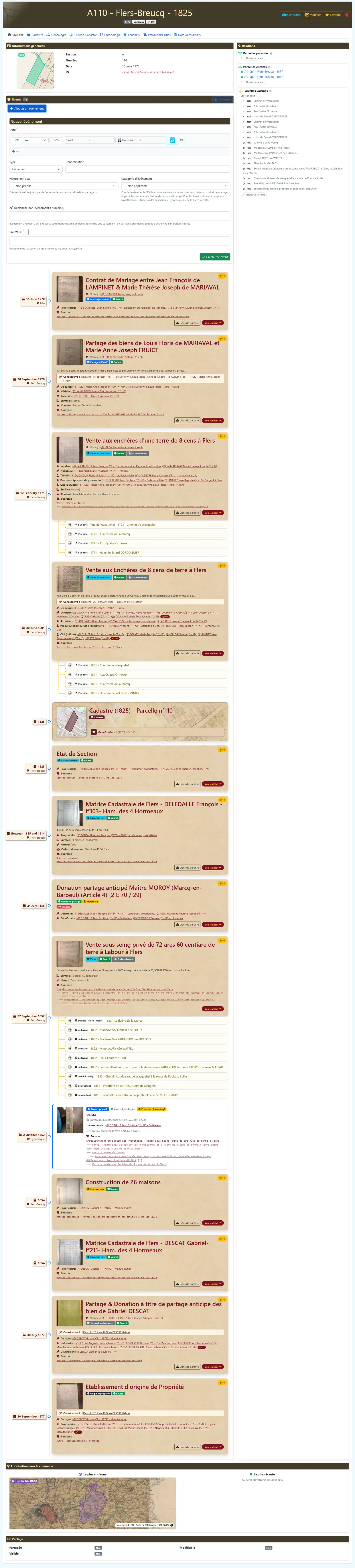
Tip: start from the deed's repertory (répertoire) to locate the minute, then transcribe the minute itself — it carries far more detail than the repertory entry.
Notarial Land Acts
Transfer of land ownership: seller, buyer, parcel description, abutting parcels.
Notarial lease: owner (bailleur) and tenant (preneur), duration, rent.
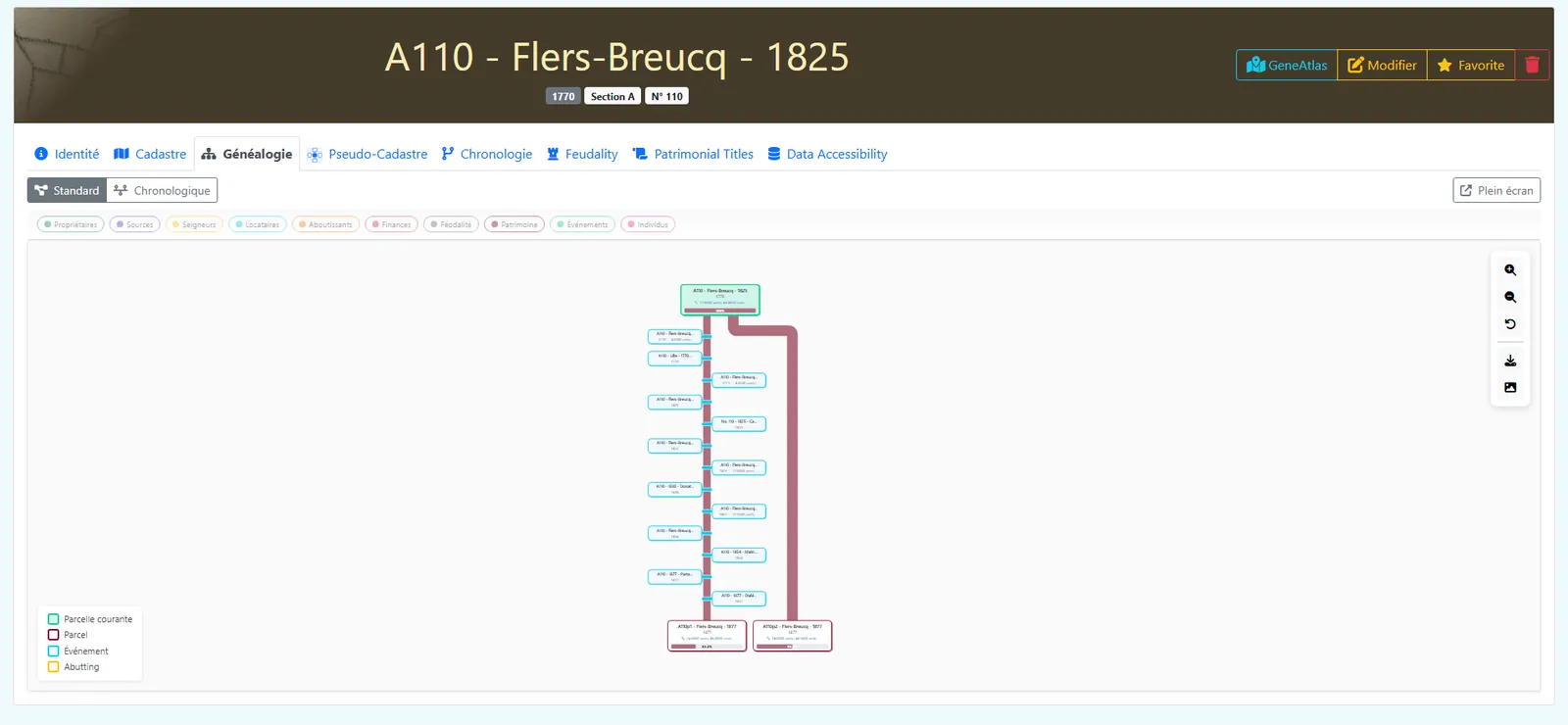
Estate division among heirs: creates parent→child parcel relationships.
Notarial contract defining property contributions; may include land brought as dowry.
Mutual land transfer between two owners; two parcels change hands simultaneously.
Testament or succession distributing land among heirs after death.
Ready to enter it?
Open the Studio, create the source, transcribe it, then link every person, parcel and event it names.
Open the Studio