Registration (Enregistrement)
Archival series 3 Q — registration & estate duties
Registration recorded acts and successions for tax. Its tables — especially the tables of successions and absences — are a powerful index: they reveal deaths, heirs and property mutations even when no notarial deed survives.
What it contains
- Tables of successions and absences — by death: the deceased, date, heirs and their relationship.
- Registers of declarations after death (mutations par décès): the estate's property and its value.
- Registration of private and civil acts, with date and a short analysis.
Step by step in GénéFoncier
-
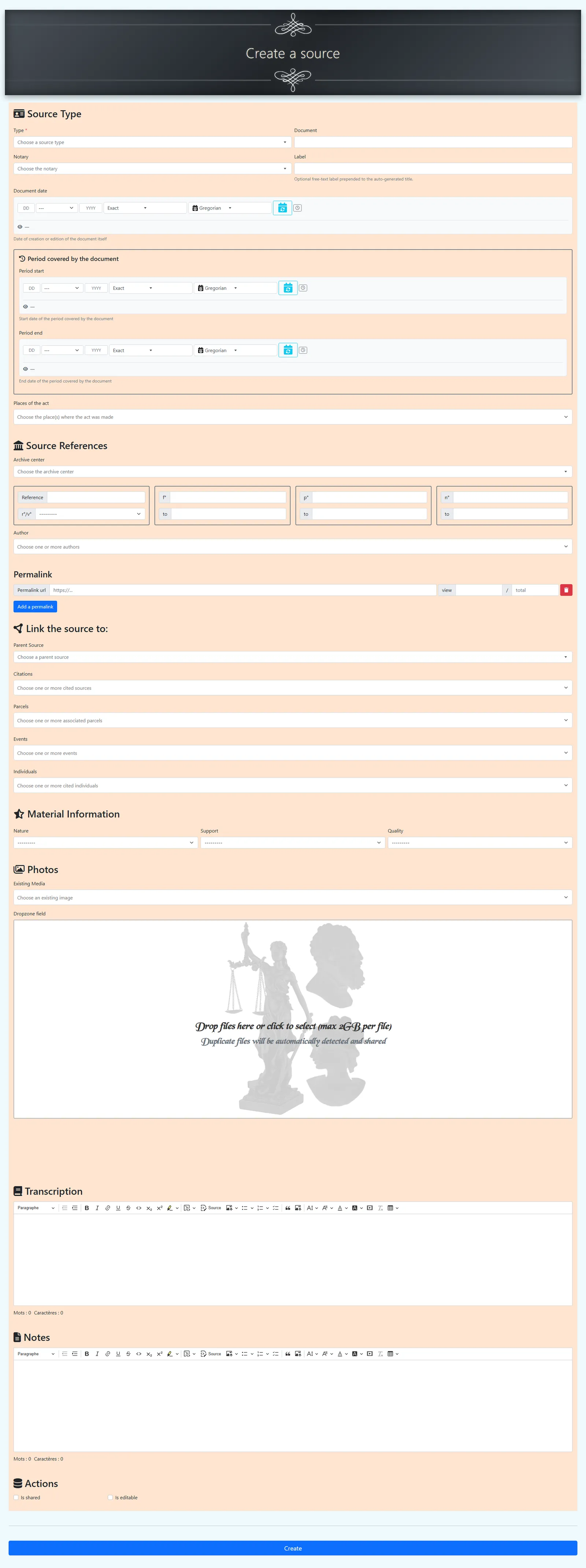
Create the source. Type 'registration' (3 Q), the register and date, the cote; transcribe the entry.
-
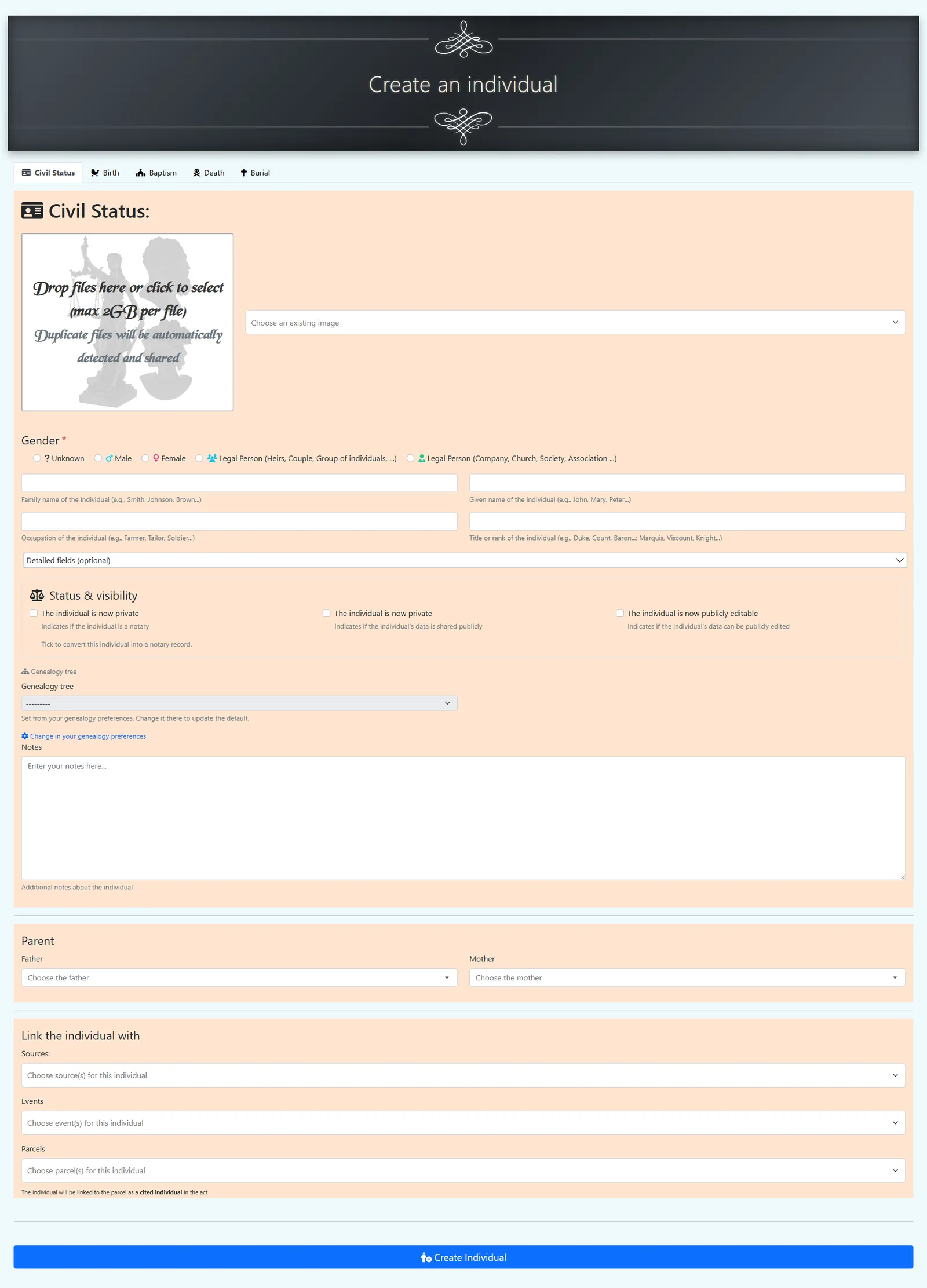
Record the people. Add the deceased and the heirs with their relationships (a death event and its filiation).
Tip: if the deceased or heirs already exist in the application, find them by name and add the event directly from their record — no need to create a duplicate.
-
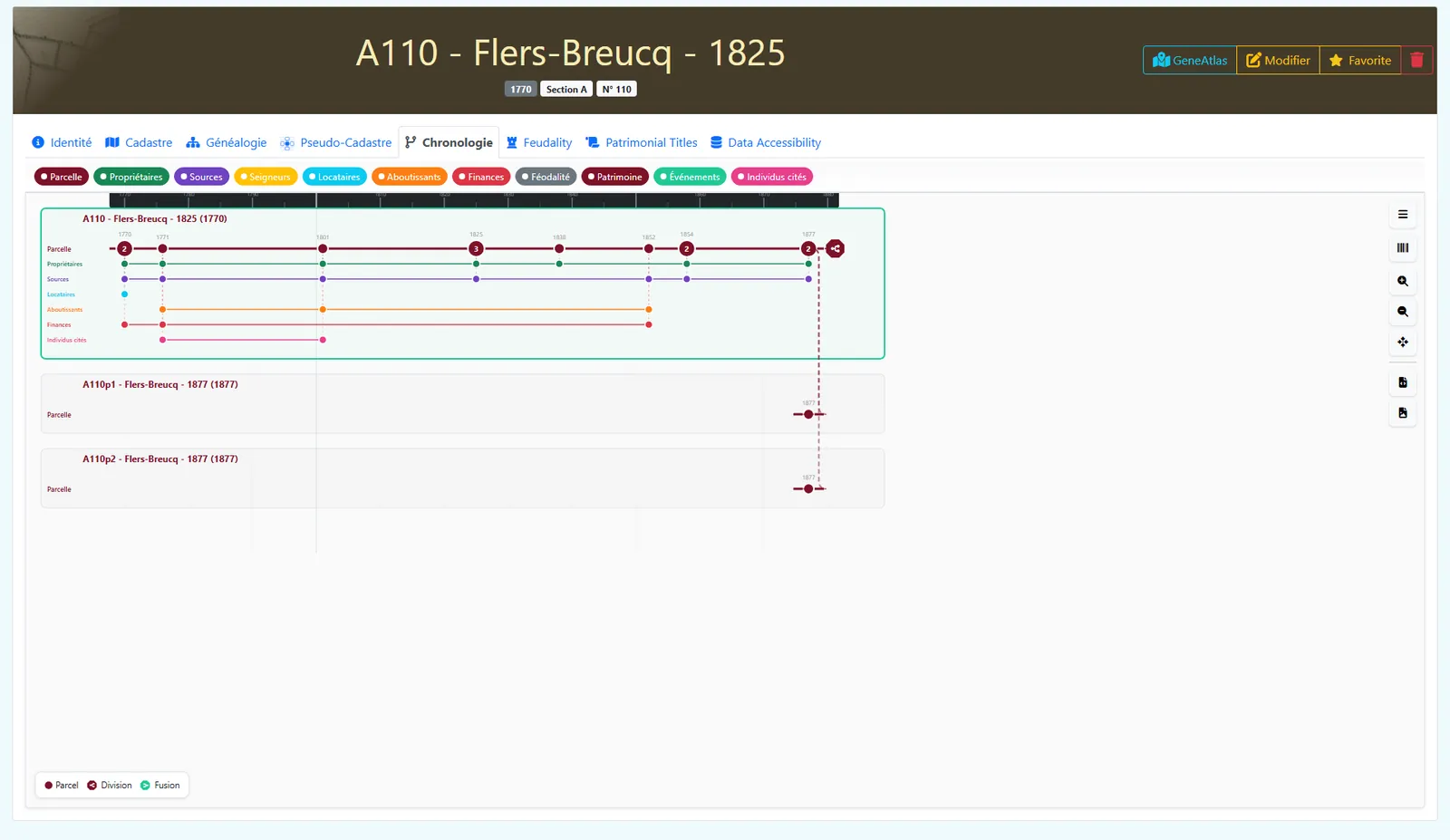
Capture the mutation. Turn the after-death declaration into a succession event on each parcel of the estate, with the heirs as new owners.
- Cross-reference. Use the table to find the notarial deed or the 4 Q transcription that details the act, and link them.
Notarial Land Acts
Transfer of land ownership: seller, buyer, parcel description, abutting parcels.
Notarial lease: owner (bailleur) and tenant (preneur), duration, rent.
Estate division among heirs: creates parent→child parcel relationships.
Notarial contract defining property contributions; may include land brought as dowry.
Mutual land transfer between two owners; two parcels change hands simultaneously.
Testament or succession distributing land among heirs after death.
Ready to enter it?
Open the Studio, create the source, transcribe it, then link every person, parcel and event it names.
Open the Studio