Feudal & Ancien Régime records
Aveux & dénombrements, terriers, censiers, tax rolls (vingtièmes)…
Before the modern cadastre, land was held in tenure. Feudal and Ancien-Régime records describe fiefs, dues and holders — the dimension ordinary genealogy tools ignore — both the typical and the atypical.
What these records contain
- Aveux & dénombrements — a vassal's declaration of a fief to the lord: its lands, rights and dues.
- Terriers & censiers — the holders of a seigneury and the cens/rents owed on each tenure.
- Tax rolls (vingtièmes, taille…) and reconnaissances — owners, holdings and assessments.
Step by step in GénéFoncier
-
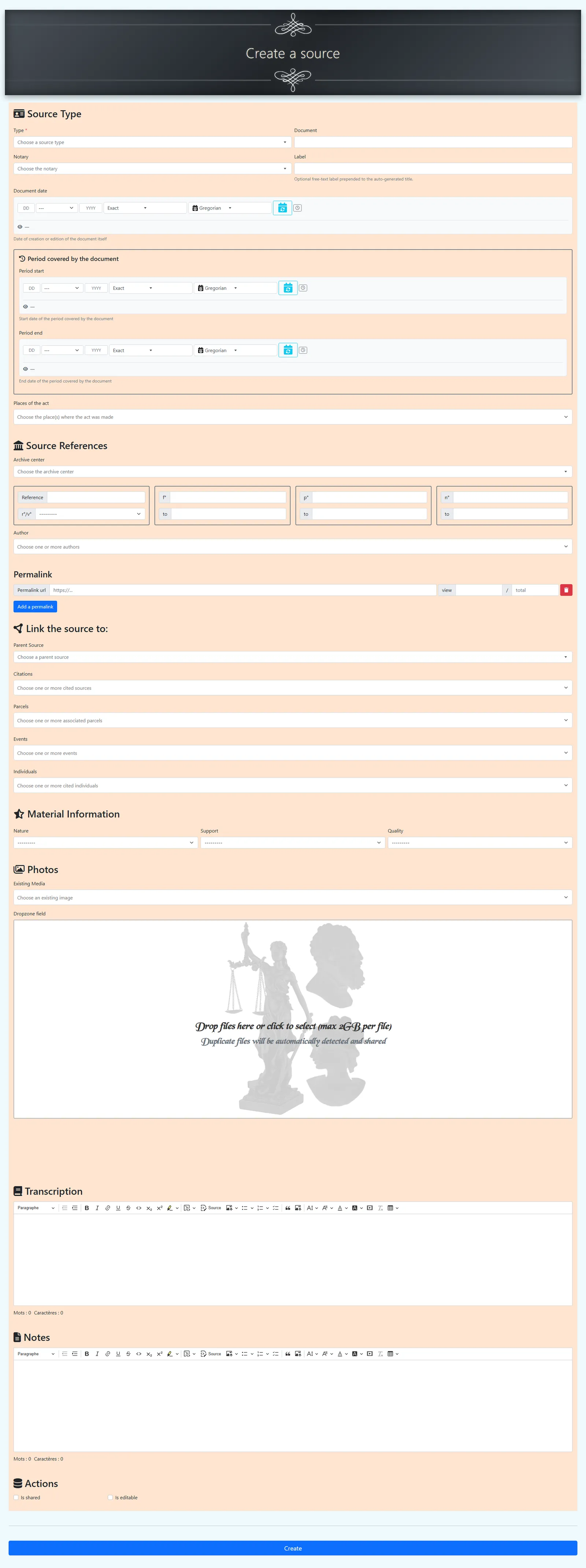
Create the source. Identify the record (aveu, terrier, roll…), its date and cote; transcribe it.
-
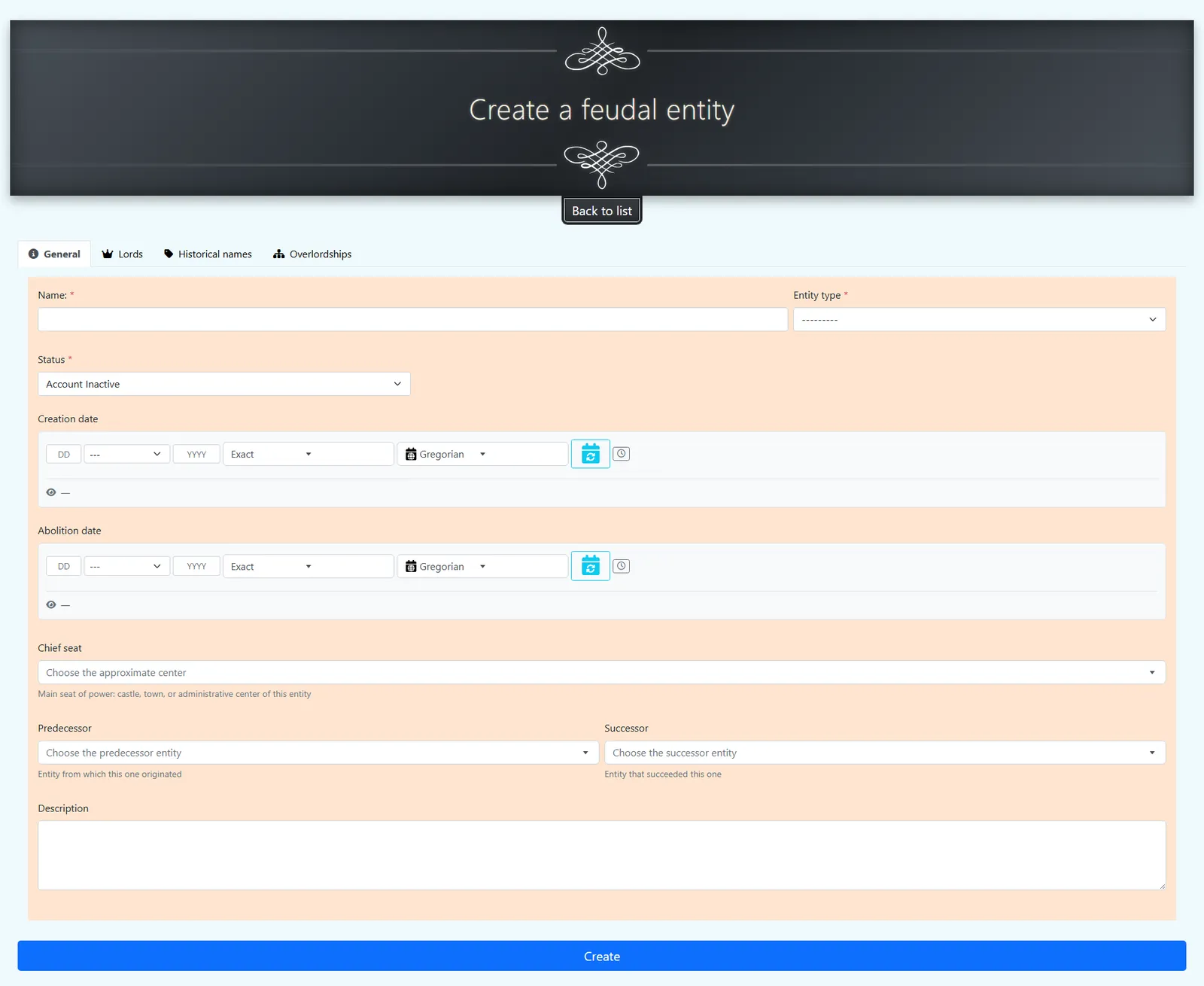
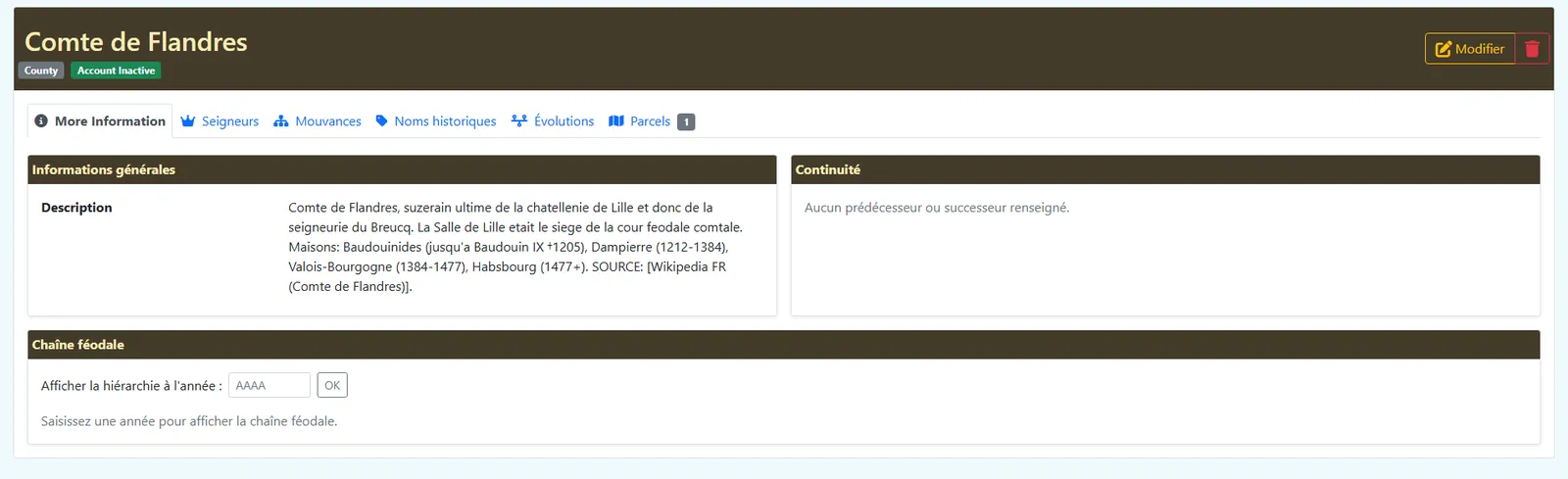
Create the feudal entity. Add the fief or seigneury, its status and dates, and its lord(s).
Tip: you can also start from the parcel's record — open the parcel, navigate to the Féodalité tab, and link or create the feudal entity directly from there.
-
Record the tenure. Attach the parcels held under it, with the tenure type (cens, rente, service) and the dues.
- Place the holders. Add the holders/vassals as people tied to the tenure, and source every right and due.

These records are uneven and local — note the lord, the date and the exact wording of each due, even when the document is atypical.
Feudal Documents (Ancien Régime)
Declaration by a vassal to his lord listing all fiefdom lands with descriptions and dues.
Seigneurial register listing tenants, their lands, dues owed, and neighboring parcels.
Ready to enter it?
Open the Studio, create the source, transcribe it, then link every person, parcel and event it names.
Open the Studio